Sunday, June 29, 2025

The Big Lie: How Government is the Biggest Landlord of Johannesburg’s Rotting Buildings**

# ๐Ÿš️ **The Big Lie: How Government is the Biggest Landlord of Johannesburg’s Rotting Buildings**


**By Noko Mabofa Maleka | Insight Jozi News** They call them *indawo emnyama* — “dark places” in isiZulu. These buildings, scattered across Johannesburg's inner city like open wounds, are rotten, stripped of dignity, cloaked in darkness, and crawling with the ghosts of the government's neglect. They are not “hijacked buildings,” as the popular narrative would have you believe. No, the truth is more uncomfortable: an estimated **92%** of these so-called hijacked buildings **still legally belong to the government** — national, provincial, or municipal. But the state has effectively abandoned them, leaving them to rot into terrifying monuments of crime, poverty, and despair. Welcome to Johannesburg’s biggest open secret: **the government is the slumlord-in-chief.** --- ## ๐Ÿ’ก **The Myth of 'Hijacked Buildings'** The term “hijacked building” conjures images of private property taken over by criminal syndicates. And while those do exist, the majority of these derelict buildings were **never privately owned** to begin with. In fact, they were **public assets** — former hospitals, post offices, administrative offices, and housing projects — that have been discarded like broken furniture. The reality is that what we call “hijacked” is often just **state abandonment**. What happens next is predictable: the power is cut off, the plumbing breaks, windows shatter, and entire structures collapse into chaos. With no security, no oversight, and no investment, these buildings become havens for **drug addicts, undocumented immigrants, human traffickers, and violent criminals**. Yet they are not “hijacked.” They are still on the government’s books. Just neglected. --- ## ๐Ÿ“ **The Dead Zones of the Inner City** Let’s take a walking tour of Johannesburg's shame. - **Florence Nightingale Hospital, Braamfontein** Once a bustling public hospital, it now sits on **Kotze Street**, one of the most dangerous roads in the city. The building is a death trap — literally. *I personally witnessed a woman being robbed, raped, and left to die right there.* Police don't dare go in. And if they do, it's rarely without backup. This is a no-go zone for the law. - **The Old Post Office, CBD** A majestic historical structure, now gutted and overtaken by **Nyaope boys**. No activity, no restoration, no plan — just slow decay. It’s been vacant for over **a decade**. - **Metro Building, Braamfontein** Once home to Johannesburg’s proud municipal offices, today it’s shut down and dark. Already it's attracting squatters and drug users. It will be *indawo emnyama* soon — just give it a few months. These are just three buildings. There are **dozens more** following the same pattern. --- ## ๐Ÿ”ฅ **Rot by Design?** Why is this happening? Is this negligence? Bureaucratic incompetence? Or is there a deeper strategy? One can’t help but ask: is the state **intentionally letting buildings rot** to reclaim or redevelop them later under new terms? Is this urban decay part of a **larger, more sinister economic game** involving tenders, land grabs, and ‘redevelopment’ projects where the poor are pushed out, and luxury flats appear overnight? The trend is too consistent to ignore. --- ## ๐Ÿ’ฌ **Public Safety in Collapse** These buildings don’t just represent failure — they are a clear and present danger. They house **prostitution rings**, **drug dens**, and **murderers**. People die here. People vanish here. Worse, they become tools for political theatre. When tragedy strikes — as it did in **Usindiso Building** during the devastating fire of 2023 — politicians show up in front of cameras, offer condolences, and leave. No follow-up. No action. No plan. Meanwhile, **ordinary residents**, especially women and children, continue living in fear, trapped in buildings the government *technically still owns* but emotionally and practically abandoned. --- ## ๐Ÿข **Who Owns the Johannesburg Mall?** That’s another mystery. Many prominent structures in the city have **opaque ownership**, layers of shell companies, or disputed titles. But what’s clear is this: the **government’s track record as a property custodian is nothing short of catastrophic.** --- ## ๐Ÿง  **Conclusion: From Darkness to Accountability** It’s time we **challenge the “hijacking” narrative** and call it what it is: **neglect by the state**. Until there's transparency about government-owned properties, a real strategy to revive them, and accountability for those who allowed them to rot, Johannesburg’s “dark places” will only grow in number — and in horror. Johannesburg doesn’t need a scapegoat. It needs leaders who care. It doesn’t need propaganda. It needs **policy**. And above all, it needs the public to **stop believing the lie.** --- ๐Ÿ“ธ *Photos and video coverage of these buildings will be featured this week on* [**www.insightjozinews.blogspot.com**](http://www.insightjozinews.blogspot.com) *and our WhatsApp Channel.* ๐Ÿ—ฃ️ *Have a tip or story? WhatsApp us directly on* **072 157 9188** --- #InsightJoziNews | #AbandonedJozi | #IndawoMnyama | #GovernmentNeglect | #JoziTruth

Saturday, June 28, 2025

Is Shivambu forming his own cult?

 Floyd Shivambu's New Political Formation Featuring None other than the infamous Pastor Zondo. Is he forming his own cult?

By Noko Mabofa Maleka
๐Ÿ“ Insight Jozi News | insightjozinews.blogspot.com


"When a politician and a pastor with matching egos and scandals join forces, you don’t get a movement—you get a reality show."

South Africa, brace yourself. As if the political circus wasn't already overbooked with clowns and preachers, Floyd Shivambu has decided to step into his destiny—not as a politician of the people, but perhaps as a high priest of his very own politico-religious cult.

Yes, ladies and gentlemen, you read right. The Economic Freedom Fighters (EFF) co-founder has allegedly broken away to form his very own political party, and guess who’s rumoured to be in his front row? The infamous Pastor Zondo of Rivers of Living Waters Ministries—a man known less for baptisms and more for scandals dripping in holy oil and teenage trauma.

๐Ÿ”ฎ Politics, Prophets, and Predators: What Could Possibly Go Wrong?

Pastor Zondo isn’t just any pulpit pounder. He’s the man, the legend, the video, who once made headlines for being caught with his cassock down—literally. His church, often whispered to operate more like a cult than a congregation, is now becoming the spiritual wing of Floyd’s new political formation?

If you’re thinking, “This sounds like satire,” unfortunately, it’s not.

The very same Zondo currently faces disturbing allegations involving the sexual abuse of teenage girls within his church—allegations that have refused to disappear, even with all the anointing oil in Gauteng. Yet, somehow, this man is a central character in a new "movement" meant to save the country?

๐Ÿง  A Match Made in Heaven (or Somewhere Lower)

Let’s put it this way: if politics is theatre, then Shivambu and Zondo are a double act no one asked for but South Africans are going to get anyway. Both have tasted power, both are obsessed with control, and both are surrounded by more allegations than accomplishments.

  • One is accused of capturing minds through doctrine.
  • The other is accused of capturing minds through ideology.
  • Together? They might just be capturing your vote—and your soul, if you’re not careful.

Is it a party or is it a pulpit? Is it a campaign rally or a prayer meeting? Are we voting or being delivered from the demons of democracy?

We’re not sure. Neither, it seems, are they.

๐Ÿ—ณ️ Politics in South Africa: Now With Extra Incense

This bizarre marriage between pulpit and Parliament raises serious questions. Has Floyd Shivambu finally given up on revolutionary politics and chosen revelation politics instead? Has the fight for economic freedom turned into a battle for tithes and tongues?

And more importantly: Is Floyd building a political party or launching a full-blown cult?

With Zondo on board, the campaign slogan might as well be:

“Lay hands on your ballot, the Lord is watching.”

๐Ÿ“ Conclusion: When the Shepherd Becomes the Commissar

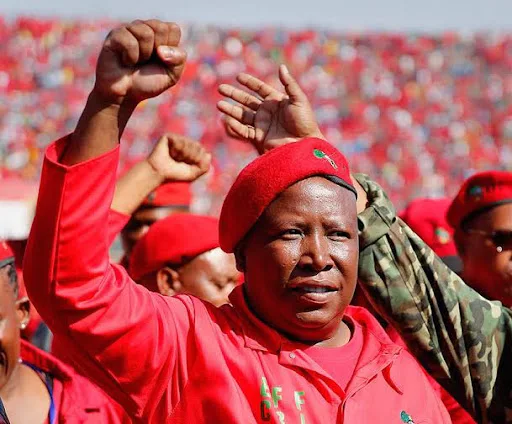
As the nation reels from unemployment, corruption, and rolling blackouts, one might’ve hoped for leaders grounded in integrity and vision. Instead, we’re getting sermons and scandals wrapped in red berets.

What this new political "formation" really represents is anyone’s guess—but if it walks like a cult, talks like a cult, and recruits like a cult… well, you do the math.


๐Ÿ”ด Tags:
#FloydShivambu #PastorZondo #EFFSplit #NewPoliticalParty #CultPolitics #SouthAfricaNews #InsightJoziNews #ZondoScandal #PoliticalSatire #ChurchAndState

Tuesday, June 24, 2025

Drugs, Cults and Betrayals” — Floyd Shivambu Drops Bombshells About the EFF and MK Party

“Drugs, Cults and Betrayals” — Floyd Shivambu Drops Bombshells About the EFF and MK Party


By Noko Mabofa Maleka | Insight Jozi News

In an explosive interview aired on e.tv, former Economic Freedom Fighters (EFF) deputy president Floyd Shivambu broke his silence on the toxic inner workings of the EFF, denouncing it as a “cult,” while also hurling shocking allegations at Nhlamulo Nhleko — the MK Party spokesperson and daughter of former President Jacob Zuma.

๐ŸŽค Shivambu Labels the EFF a Cult

Speaking with striking candour, Shivambu refused to retract his previous claims that the EFF is operating like a “cult.” “I won’t take that back,” he insisted. “It is what it is — a political cult masquerading as a revolutionary movement.”

This marks one of the most public and direct repudiations of the party’s internal culture by one of its founding leaders. Shivambu, once the party’s ideological bulldog and feared debater, has seemingly turned against the very machinery he helped build.

๐Ÿ’ฅ Drug Accusations Against MK Party’s Nhleko

But Shivambu didn’t stop there. He took aim at Nhlamulo Nhleko, spokesperson for the newly formed MK Party and daughter of former president Jacob Zuma, alleging that she is “on drugs” or “alcohol.” “She tweets like someone who is intoxicated,” said Shivambu, without offering concrete evidence.

The accusations shocked viewers, especially since Shivambu and Nhleko were not previously known to be adversaries. Many see this as a new front in the growing war between former EFF leaders and Zuma-aligned factions.

๐Ÿงจ Factions and Fractures: ANC, EFF, MK and Beyond

Political analysts have noted that Shivambu’s outburst is a symptom of deeper fragmentation within South Africa’s revolutionary political movements. With the ANC suffering post-election disarray, the EFF battling internal discord, and the MK Party accused of being a Zuma vanity project, South Africa’s left is bleeding from all angles.

Whether Shivambu’s remarks are a bold act of truth-telling or a desperate ploy to stay politically relevant remains to be seen. But one thing is clear: the gloves are off, and the truth — or what each faction claims as truth — is now a weapon.

๐Ÿ“บ Watch the Full Interview

Catch the full interview on YouTube here: Floyd Shivambu Speaks Out

๐Ÿ“Œ Labels:

  • Floyd Shivambu
  • EFF
  • MK Party
  • Jacob Zuma
  • Nhlamulo Nhleko
  • Insight Jozi News
  • Political Drama
  • South African Politics

Sunday, June 22, 2025

Is Floyd Shivambu an EFF Spy in MK Party? ๐Ÿ” Sangoma and Fikile Mbalula Agree

BREAKING: Is Floyd Shivambu an EFF Spy in MK Party? ๐Ÿ” Sangoma and Fikile Mbalula Agree

By Noko Maleka – Insight Jozi News | Adapted for Opera News

A storm is brewing in South African politics as both a controversial sangoma and the Secretary-General of the ANC have raised eyebrows over the role of Floyd Shivambu within the uMkhonto weSizwe (MK) Party.

Dr Khehlelezi, real name Bhongolethu Mzozo, went viral on 18 June 2025 after claiming that Shivambu is a “double agent” sent by EFF leader Julius Malema to infiltrate and destabilize the MK Party after the EFF’s poor showing in the 2024 elections.

“Floyd and Julius Malema are still close. Before MK arrived, the EFF was the main opposition. Now Floyd is pretending to be with MK, but he’s laying the groundwork for a new party with Malema,” said Dr Khehlelezi.

๐Ÿ”— Fikile Mbalula Shares the Same Concern

In a recent YouTube interview, ANC Secretary-General Fikile Mbalula claimed that Shivambu and Malema are working together to “surgically disempower the ANC.”

“They want to collapse the ANC through breakaway movements. They use ideological smoke and mirrors to turn comrades into enemies,” Mbalula warned.

๐Ÿ—ฃ️ Shivambu’s Press Briefing: A Smokescreen?

On 19 June 2025, Floyd Shivambu held an unsanctioned press conference in Midrand, where he said he would consult with the public on launching a new political formation. While remaining in the MK Party, he stated:

“We need a new conversation. I am speaking to South Africans to see if the time has come for something fresh.”

๐Ÿ˜‚ South Africans React Online

  • Thiemuli Rudolf Mudau: “He’s the main source of the intelligent reports ๐Ÿคฃ.”
  • Lufuno Vee Mutshatshi: “He must buy another pack of bones. These ones are not making sure.”
  • Angela Bianca Mphana: “The results of using expired bones ๐Ÿ˜‚.”
  • Patrick Mokoena: “Those bones are misleading him. He must throw them away as in yesterday.”

๐Ÿ“ฐ Sources:

  • Briefly.co.za – “Sangoma Claims Floyd Shivambu Is an EFF Spy…”
  • YouTube Interview: Fikile Mbalula on Floyd and Malema’s plan to disempower ANC (June 2025)
  • Social media comments compiled from Facebook and X (formerly Twitter)

Disclaimer: All allegations are unverified and based on public commentary. No official confirmation has been provided by the EFF, MK Party, or Floyd Shivambu.


๐Ÿ”– Labels / Tags:

Tags: Floyd Shivambu, EFF, MK Party, Julius Malema, Fikile Mbalula, ANC, Dr Khehlelezi, South African Politics, 2025 Elections, Political Infiltration, Opera News, Insight Jozi News, Black Politics


Friday, June 20, 2025

Johannesburg Is Under Attack by Rats — Maybe It’s Time We Eat Them

When Jozi Is Overrun by Rats… Maybe It’s Time to Braai Them

When Jozi Is Overrun by Rats… Maybe It’s Time to Braai Them

By Noko Maleka | Insight Jozi News | 2025

Johannesburg — The City of Gold is under siege—not by potholes or load‑shedding, but by rats. According to the South African Pest Control Association, the rodent population here has exploded by 450% in recent years. [1][2] Hillbrow to Braamfontein: the rats are winning, and the city’s response? Silence.

No sanitation blitz. No fumigation plan. Not even a half-hearted public statement.

So if the city won’t act—maybe we cook.

Yes, you heard right. It’s 2025, and Johannesburg might just eat its way out of the rat crisis.

Don’t dismiss it as madness. In parts of Vietnam, India, Malawi—even Thailand—rat is already a delicacy.

๐Ÿฝ️ The Jozi Rat‑Tasting Menu

  • Alex Fried Rat Bites – Deep-fried, peri‑peri, lemon & garlic, served with pap & chakalaka.
  • Hillbrow Rat Curry – Spicy tomato-based rat chunks simmered like bunny chow.
  • Yeoville Rat Kebabs – Moroccan-spiced skewers that could be the next Maboneng hit.
  • Soweto Rat Stew – Slow-cooked with veggies, dumplings or samp.
  • Braamfontein Rat‑&‑Cheese Sliders – Cheese-rat meatballs in mini buns with fries and irony.

๐Ÿ€ Satire & Call to Action

This is satire—but the rat crisis is painfully real...

[1] SAPCA rodent report; [2] Dr. Mpho Shongwe interview, Insight Jozi News.


From Backyard to Breakthrough: How Noko Moholane's Farm Dreams Are Blossoming Despite Government Neglect

From Backyard to Breakthrough: How Noko Moholane's Farm Dreams Are Blossoming Despite Government Neglect

By Noko Mabofa Maleka | Insight Jozi News


In the heart of Moletjie, Limpopo, where the sun scorches dry soil and hope often battles hardship, a young man named Noko Moholane is quietly rewriting the story of rural agriculture in South Africa.

Armed with a Bachelor of Agriculture degree from the University of Limpopo, Noko was filled with dreams of cultivating the land, feeding communities, and becoming a contributor to South Africa’s food security. But what he wasn’t prepared for was the silent war he would face after graduation — a war against a lack of support, a shortage of land, and the deafening silence of a government that claims to champion agricultural development.

“After finishing my degree, I applied for land, I knocked on every door — but nothing. Not even a response,” says Moholane. “Eventually I realized I had to start where I was, with what I had — my yard.”

And start he did.

What began as a few seedlings has now grown into a thriving small-scale farm nestled within the boundaries of his family yard. From avocados, mangoes, and oranges to seasonal vegetables, Noko’s backyard farm has become a beacon of resilience and innovation. He sells fresh produce to communities around Polokwane and nearby villages — both to individual households and small businesses looking for reliable supply.

His Biggest Challenge: Water

In Moletjie, many households still live without running water. For a farm, this is catastrophic. “I had to drill a borehole, but the water isn’t enough,” he explains. “So I buy water every month just to keep the crops alive. It’s expensive, but I can’t let them die. This farm is all I have.”

A Wake-Up Call to Limpopo’s Department of Agriculture

Noko’s story raises a very uncomfortable question: If a qualified, passionate, and self-driven graduate like Moholane can’t get help from the Department of Agriculture, who is being helped?

It is deeply troubling that in a province rich in fertile land and blessed with young talent, the very people who should be championing food production are left to fend for themselves, watering crops from JoJo tanks and borrowing equipment from neighbors while departments sit on billions in annual budgets.

“If I had just half the support given to commercial farms, I could employ at least 5 people right now,” Moholane says. “There are young people here who want to work — I could train them.”

An Opportunity Being Wasted

South Africa faces a dual crisis: rising unemployment and food insecurity. Young farmers like Noko Moholane offer a solution to both — if only the state would pay attention.

Instead, while government agricultural projects are often riddled with red tape, inefficiency, or even allegations of corruption, Noko quietly wakes up every morning to water his crops, plant his seeds, and sell his harvest, using little more than passion and prayer.

A Call to Action

We call on the Limpopo Department of Agriculture and Minister John  steenhuizen to visit Moletjie, see what this young man has built with nothing — and ask themselves what he could do with proper support.

This is not a request for charity — this is a plea for partnership. Moholane is not a passive recipient. He is a producer, an innovator, and a pillar of hope for his community. He deserves better.

For inquiries about produce or to support his farm water project, contact Noko Moholane at +27 84 915 6377.


Labels: agriculture, young farmers, Limpopo, backyard farming, black excellence, Noko Moholane, small-scale farming

Meta description: Meet Noko Moholane, a young farmer from Moletjie, Limpopo, who turned his yard into a thriving farm despite being ignored by government. A story of resilience and a wake-up call to South Africa’s agricultural leadership.

Thursday, June 19, 2025

R. Kelly Rushed to Hospital After Alleged Overdose in

R. Kelly Rushed to Hospital After Alleged Overdose in Prison

Date Published: June 17, 2025
By: Insight Jozi News Team


In a shocking development, incarcerated R&B singer R. Kelly reportedly suffered a serious medical emergency after an alleged overdose at the Federal Correctional Institution in Butner, North Carolina. According to his legal team, Kelly was administered a dangerously high dose of medication while in solitary confinement, prompting a rushed hospitalization over the weekend.

His lawyer, Beau Brindley, filed a third supplement to a pending emergency motion, stating that Bureau of Prisons staff gave Kelly medication that exceeded safe levels. The supplement further claims Kelly collapsed after waking up dizzy and disoriented on June 13. He allegedly crawled to the door of his cell before losing consciousness.

Brindley is now pushing for a temporary release under house arrest, citing not only the overdose but also previous threats against Kelly’s life in prison. One explosive allegation includes a sworn statement from an inmate, Mikeal Glenn Stine, who claims he was asked by officials to harm the singer.

Even more alarming, doctors allegedly told Kelly he had blood clots in his legs and lungs requiring urgent surgery, which he was denied due to recovery logistics. “He could die from this condition,” the motion argues, “and they are letting it happen.”

Meanwhile, the prosecution paints a different picture. Assistant U.S. Attorney Jason Julien stated in court that solitary confinement was used to protect the singer, and emphasized Kelly’s long history of sexual abuse convictions, asserting that Kelly has “never taken responsibility.”

Currently serving a 30-year sentence on charges related to child exploitation, forced labor, and other federal offenses, Kelly’s legal team has even gone so far as to appeal for a presidential pardon — despite no known ties to former president Donald Trump, aside from previously living in Trump Tower Chicago.

Disclaimer: This story was adapted from publicly available reports, including coverage from PEOPLE Magazine.

If you or someone you know is a victim of sexual abuse, please text "STRENGTH" to 741-741 for free, 24/7 support from a certified crisis counselor.


"Women Are 95% Responsible for Gender-Based Violence – Men Are Just the Final Blow"


Opinion | Women Are 95% Responsible for Gender-Based Violence – Men Are Just the Final Blow

By Noko Mabofa Maleka
Opera News Contributor | Insight Jozi News


"We can’t fix gender-based violence unless we fix the whole society that breeds it — and that includes the silent roles women play in keeping the violence alive."

Why Society – and Especially Women – Must Take Accountability

For too long, the narrative around gender-based violence (GBV) has been simplified: men abuse, and women are victims. But what if the truth is more complex, more uncomfortable? What if 95% of what leads to GBV is rooted in how society — and particularly women — enable, teach, and perpetuate toxic systems?

I say this not to excuse abusers, but to diagnose the disease properly. If women raise boys to believe that crying is weakness, that being dominant is masculinity, and that emotional vulnerability is shameful — how do we expect those boys to grow into men who can express themselves without violence?

When women protect abusive partners because of family shame… when women exploit children for social grants or emotional blackmail… when society rewards female manipulation as “strategy” and condemns male reaction as “abuse” — we are building the very violence we claim to fight.

Let’s Talk About Lobola — The Quiet Engine of Possessiveness

Lobola, in its origin, was noble. It was a way for a man to prove to the woman’s family that he had the discipline and financial readiness to take care of their daughter. It symbolized respect, stability, and commitment.

But that was then.

Today, Lobola has expired. And instead of uniting families, it has birthed entitlement, possessiveness, and silent violence. The psychology is simple: when you pay for something — a house, a car, a service — you believe it is yours.

To many men, that woman becomes property. She is "his." He owns her. He controls her. He disciplines her.

That’s not love — that’s legalised possession. It’s not culture — it’s a toxic trade system wrapped in tradition.

Culture Evolves — or It Dies

Culture is not a fossil. It is meant to evolve. We no longer hunt with spears. We no longer wear skins to war. And we should no longer trade cows or cash for women.

Lobola, today, is a breeding ground for gender-based violence. It ties a man’s pride and a woman’s worth to money — a combination that becomes explosive when the relationship sours.

Let’s Abolish Lobola and Save Lives

This is a call for cultural courage. Let’s stop pretending that all tradition is good tradition.

Lobola must be abolished. We can still celebrate love, commitment, and family without buying and selling the idea of womanhood. A woman is not a price tag. A relationship is not a transaction.

Until we unlearn this dangerous mindset, men will continue to feel they have the right to control — and hurt — what they “paid for.”

What Do You Think?

  • Is Lobola still relevant?
  • Does Lobola contribute to GBV?
  • Can African love exist without cultural payments?

Let the debate begin. Drop your thoughts in the comments. Share if you agree — or disagree. Let’s talk.

An Open Letter to the Youth of South Africa: Reclaim the Baton of Revolution

By Noko Mabofa Maleka –
Talk Show Host | Journalist | Digital Activist

The baton of freedom has not been passed to you; it has been hidden, broken, and kept under lock and key. Your task is not just to run the race — it is to reclaim it.

As we mark yet another Youth Month, celebrating the unshakable courage of the 1976 generation, I write this letter not as an elder, not as a politician, and not as a preacher — but as one among you who refuses to accept the slow death of a nation by political betrayal and economic sedation.

We are a people who were sold out — and unless we, the youth, wake up to that fact, we will remain loyal to a system that was never designed to see us win.

A Legacy of Betrayal, Not Victory

In a groundbreaking interview I recently hosted with Carl Niehaus on 1 Africa Radio TV, the former ANC spokesperson unapologetically named the moment of betrayal: 1992, Davos, Switzerland. There, at the World Economic Forum, Nelson Mandela — under pressure from Western capitalists — abandoned the radical economic vision of the ANC’s Freedom Charter.

Niehaus points out that this shift was not rooted in democratic debate — but in elite compromise. The vision that guided the liberation struggle was sidelined, if not silenced. This betrayal would become the template for a post-apartheid South Africa that is politically free but economically shackled.

A Cloud of Confusion

Today’s youth have inherited a system designed to keep them disoriented. The results are clear:

  • Rampant youth unemployment
  • Crumbling education systems
  • Mental health crises
  • Hyper-consumerism and identity crises

This is not just economic stagnation. This is deliberate disempowerment.

Reclaim the Baton. Rewrite the Ending.

We cannot run a race if we don’t understand why we’re running. The first act of rebellion is to acknowledge the betrayal.

Our task now is not to romanticize political freedom — but to reignite the fire of true economic liberation. To demand land reform. Real education. True ownership. Mental clarity. Cultural pride. Purpose.

You Are Not the Lost Generation — You Are the Unfolding Chapter

You were never meant to win in a system designed to break you. But you can still change the rules.

Honour June 16 not just with songs — but with solutions. Not with hashtags — but with hard truths. Not with tears — but with tenacity.

You were sold out. But that doesn’t mean you must remain sold.

With revolutionary grace,
Noko Mabofa Maleka
Talk Show Host – 1 Africa Radio TV
Founder – Insight Jozi News

Wednesday, June 18, 2025

noko mabofa maleka

Who is Noko Maleka? | Insight Jozi News

Who is Noko Maleka?

Noko Maleka at 1 Africa Radio TV

Noko Mabofa Maleka (born June 23, 1986 in Polokwane, Limpopo) is a South African reality TV star, radio presenter, journalist, podcaster, and digital marketer. He is best known for his role in the Moja Love Channel 157 show Sugar Mama's Johannesburg, where he stars alongside his wife, Princess Cookie Tjeo Kgaphola-Maleka of Sekhukhuni Royalty.

Maleka is the founder of Insight Jozi News, a blog and street-level media platform covering Johannesburg life. He also hosts shows on 1 Africa Radio TV and previously worked at Mzansi Joburg City FM, Jozi FM, Classic FM, and Otee FM (as station manager).

Background & Education

  • High School: Sir Harry Oppenheimer High School
  • Electrical Engineering: Tshwane North College
  • Diploma in Public Relations: UNISA (University of South Africa)
  • Media and Communications: Boston College

Career Journey

Noko Maleka’s journey began in the mines and hospitality industry before transitioning into media. He’s known for tackling hard-hitting community issues and producing reality-based content that reflects authentic African stories.

His current projects include the launch of Comono Media and developing platforms to empower content creators and local entrepreneurs.

Personal Life

Married to Princess Cookie Kgaphola-Maleka, Noko is a father, husband, and cultural figure. The couple's relationship is featured prominently on Sugar Mama’s Johannesburg.

He was raised in Tembisa, Johannesburg, by his late mother Meriam Maleka—a teacher and Sepedi radio tales writer—and his father Pastor Jeffery Maleka. Noko grew up singing in church and playing piano, which shaped his storytelling flair.

Follow Noko Maleka


Keywords people search for:

  • Who is Noko Maleka?
  • Is Noko Maleka married?
  • Where did Noko Maleka go to school?
  • Sugar Mama’s Johannesburg cast
  • Noko Maleka and Princess Cookie

Monday, June 9, 2025

Turn Your Side Hustle into a Brand with ‘Grow Your Business’ – Now Taking Blog Adverts Too!


Are you tired of seeing your small business struggle in silence? Our platform Grow Your Business is here to help you elevate, brand, and profit — starting today.

We Offer:

  • ✅ Company & NPO Registrations
  • ✅ Social Media Management
  • ✅ Posters, Logos & Branding
  • ✅ SEO and Online Store Setup
  • ✅ Content Creation & Marketing Strategy

๐Ÿ“ž Call or WhatsApp us: 072 157 9188


✨ Bonus for Business Owners:

If you’re looking for even more visibility, we’re now offering advertising space right here on our popular blog – Insight Jozi News.

๐Ÿ‘ฅ Our platform reaches an engaged, urban Joburg audience daily. Let us help you reach your ideal customer.

๐Ÿ“ฉ Interested in advertising? Contact us on WhatsApp or email us at nokomaleka2@gmail.com

---

Monday, June 2, 2025

Open letter to Julius Malema from Noko Maleka


An Open Letter to Commander-in-Chief Julius Malema: A Plea for Pan-African Focus and Responsible Leadership

By Noko Maleka – Pan-African Writer, Broadcaster, and Citizen of the African Renaissance


Dear Commander-in-Chief Julius Malema,

As a fellow Pan-African, I write to you not only as a citizen of South Africa but as a son of this continent—deeply moved by the ideals you carry and the revolutionary consciousness you ignite. I write in admiration, but also in hopeful counsel.

Your vision of land expropriation without compensation, your unwavering commitment to economic emancipation for the African child, and your unapologetic call for a united, borderless Africa—all resonate profoundly with my own beliefs. In a continent so long balkanized by colonial constructs, your message rings like the voices of Kwame Nkrumah, Thomas Sankara, Mangaliso Sobukwe, and Muammar Gaddafi—men who dreamed, as you do, of an Africa that governs itself, feeds itself, and defines its own destiny.

Indeed, there are days when I believe the EFF is larger than South Africa; that your political thought belongs on the floor of the African Union, shaping continental policies, redrawing priorities, and helping us collectively imagine a post-imperial, self-reliant Africa. You carry, in your words and posture, the urgency of liberation yet to be fully realized.

But, Sir, even as I stand beside you in spirit, I feel compelled to offer a reflection on the rights we have as a nation, and how sometimes, those very rights may serve as distractions from the urgent battles we must fight.

South Africa’s Constitution is hailed as one of the most progressive in the world. We pride ourselves on our freedoms—freedom of expression, of protest, of sexual and cultural identity, and of movement. These are, in theory, marks of a liberated people. But in practice, I sometimes wonder whether these rights are not, in fact, golden cages—designed to occupy our energies while the real levers of power remain untouched.

We have the right to protest, yet our cries fall on deaf ears. We have the right to education, but not the access to quality. We have the right to dignity, but the streets of our townships are still soaked in poverty, and our youth still roam without jobs or purpose. What good are these rights if they fail to produce tangible, transformational outcomes for the black child?

It is as though we are like a child raised in a home without structure—allowed to eat whatever they want, attend school when they wish, and set their own rules without wisdom or consequence. The illusion of choice, while seductive, can be crippling. And so I ask, are we free or simply pacified?

Sir, this is why I plead with you as a great leader, to also consider the impact of rhetoric. The struggle songs of the past—"Kill the Boer, kill the farmer"—once served a purpose, a war cry in a time of brutal oppression. But today, they risk becoming dangerous relics, misunderstood by generations that did not live the pain of their origins. You have the platform, the influence, and the brilliance to unite, not divide.

As the leader of South Africa’s third-largest political party, and a future president in the eyes of many, your voice carries the weight of an entire generation’s dreams. And while satire and political symbolism have their place, let us be cautious: what may be a chant for some, may become a command in the minds of the desperate.

Let us not be architects of further division, but rather the constructors of a future where land is returned, dignity restored, and no South African—black or white—has to fear their fellow citizen. Let us not confuse resistance with resentment, nor freedom with unaccountability.

The Africa you dream of is possible. The battles you fight are just. But in this moment, I ask you to lead with both passion and restraint, wisdom and fire. For history will remember not only what you stood against, but what you stood for—and how you chose to build, even while the world expected you to destroy.

In admiration and solidarity,
Noko Maleka
Pan-African Writer, Broadcaster, and Citizen of the African Renaissance


Cold Outside? Bend and Buy at Dunusa, Where Warmth Is Affordable!”

Small Street Hustle: 

By  Insight Jozi News


Nestled in the buzzing heart of Johannesburg CBD lies a stretch of culture, colour, and commerce—Small Street. For years, this lively corridor has been the runway of the everyday Joburger, a fashion arena where local street vendors outshine retail chains and the real drip is found hanging off open-air racks rather than boutique hangers.

Small Street isn't just a place; it’s an experience. A melting pot of trends, textures, and tastes, where entrepreneurs hustle hard, and fashion-forward individuals come to score the freshest looks without breaking the bank. From bold graphic tees to sleek faux-leather fits, from the latest sneaker drops (real or inspired) to edgy accessories—this street is where the fashion underworld meets the masses.

But take a few more steps toward the end of Bree Street, and the city reveals a hidden gem that defines Joburg slang and second-hand swag: Donosa.

You see, Donosa isn’t a fashion brand or a boutique—it’s a cultural phenomenon. It earned its name from the uniquely South African phrase “dunusa,” a Zulu word that loosely means “to bend over.” Why? Because at this second-hand clothes market, customers literally bend over large bales of pre-loved clothing to dig for style gold.

It’s a treasure hunt—jeans, jackets, and jerseys flying as bargain hunters search for the perfect fit. Some call it thrifting, Joburg calls it dunusa shopping—and trust us, it’s where the real finds happen.

Donosa has become more than a market—it’s a movement. With as little as R10 or R20, you can walk away with an outfit that turns heads on the Rea Vaya. And the stories in those clothes? Endless. From Italy to India, these threads have travelled the globe to land in the hands of a style-savvy Joburger, ready for a second life.

In many ways, Small Street and Donosa represent the spirit of Joburg—hustling, bustling, and always dressed to impress, no matter the budget. It’s streetwear with soul, where fashion meets function and creativity conqu

A Day in Bree Taxi Rank: Where Chaos Becomes Rhythm for money By Noko Maleka | Insight Jozi News

A Day in Bree Taxi Rank: Where Chaos Becomes Rhythm

By Noko Maleka | Insight Jozi News

Bree Taxi Rank Johannesburg hustle

It’s 5:00 AM and the concrete corridors of Bree Taxi Rank begin to pulse with movement. Horns honk, hawkers shout, wheels squeal. What may look like chaos to an outsider is actually an orchestrated daily miracle — transporting thousands of Johannesburg's workers, hustlers, and dreamers to their destinations.

The Beat of the City

Every minute at Bree tells a story. A woman sells vetkoeks from a bucket. A student clutches his backpack, heading to campus. A taxi driver wipes down his Quantum, blasting amapiano through worn speakers. Everyone is going somewhere — but all of them meet here.

The Human Conveyor Belt

With over 200,000 people passing through daily, Bree is not just a transport hub — it’s an informal mall, a food court, a networking space, and a workplace. It's where haircuts are given in 15 minutes and you can buy a tracksuit, sim card, or boiled eggs before your ride.

Meet Sabelo: The Hustler Barber

“I cut hair for R20 right here at Platform 6,” says Sabelo, a self-taught barber from Katlehong. “Most of my clients are taxi drivers and school boys. I can make up to R500 on a good day.” With nothing but clippers and a mirror hung on a pillar, he turns Bree's chaos into cash.

More Than Just Transport

Bree is a symbol. It represents the movement of a people who can’t afford to stand still. It’s Joburg’s pulse. And in that rush, you’ll find rhythm — a coded order in the apparent madness. Bree Rank is where modern survival meets ancient township hustle.

Advertise at the Heart of the Hustle

Is your business targeting Joburg’s working class, youth, and township commuters?

Advertise on Insight Jozi News and reach the people who move the economy.

Email: insightjozinews@gmail.com

Final Word

In a city constantly on the move, Bree Taxi Rank is the unsung hero of the daily grind. It’s gritty, loud, and alive. And it deserves to be seen not as a problem — but as proof that Johannesburg is working.

Have a Bree story to tell? Leave a comment, WhatsApp us, or tag us on Instagram @InsightJoziNews.

Have Your Say!

What’s your experience at Bree Taxi Rank? Cast your vote below:

Apartheid Never Died — It Just Changed Clothes: Prof Radebe's book Sparks fire By Noko Mabofa Maleka | Insight Jozi News | Braamfontein, Johannesburg

Apartheid Never Died — It Just Changed Clothes: Prof Radebe's book Sparks fire 

By Noko Mabofa Maleka | Insight Jozi News | Braamfontein, Johannesburg


In a thought-provoking and politically charged evening at The Commune in Braamfontein, Johannesburg, the book launch of Professor Mandla Radebe’s new release, Apartheid Is Not Over, drew together activists, intellectuals, and political leaders for a night of critical engagement and unapologetic truth-telling.

The event featured keynote remarks by Mr. Solly Africa Mapaila, General Secretary of the South African Communist Party (SACP), who did not mince words. “We must stop pretending we are free when we are still trapped in an economic system built to keep Black people out of ownership and opportunity,” he said to a room that nodded, clapped, and occasionally stood in agreement.

Prof Mandla Radebe and Noko Maleka

๐Ÿ“˜ The Book: Apartheid Is Not Over

Prof. Mandla Radebe’s book is a bold political intervention. In it, he unpacks how apartheid's economic architecture was never dismantled — only rebranded. Land, wealth, ownership, and capital remain largely in the hands of a racial elite, while the majority continue to suffer under neo-liberal policies that serve corporate interests over people.

He writes: “The negotiated settlement of the early 1990s gave Black people political freedom but kept economic power in the hands of apartheid beneficiaries.”

The book doesn’t just offer critique — it calls for systemic transformation, deeper introspection, and an end to performative reconciliation. It is both a mirror and a matchstick: reflecting uncomfortable truths and igniting revolutionary imagination.

Book launch panel with Prof Radebe, Mapaila and others

๐Ÿ”ฅ A Call to Rethink Our Freedom

Mapaila’s contribution echoed the central argument of the book. “If we don't dismantle the economic engines of apartheid, then 1994 was just a cosmetic change. We must build an economy that serves the people — not the few.”

Audience members engaged in robust Q&A, with some calling the book “a wake-up call” while others questioned whether the ANC-led government has lost its revolutionary mandate.

๐Ÿ“š Not Just One Voice – A Growing Body of Work

Prof Radebe’s book is not alone in raising the alarm. In recent years, a new generation of South African thinkers and writers have pushed back against the idea that the country’s past is behind us.

  • Land Matters by Tembeka Ngcukaitobi exposes the failures of land reform and argues that white economic dominance has not been dismantled — only tolerated.
  • The Poisoned Well by Tim Kelsall and Chandre Gould investigates the apartheid regime’s sinister chemical warfare programme and shows how its legacy still shapes national trauma.
  • Blacks Can't Be Racist by Mugabe Ratshikuni challenges liberal narratives and reframes racism as a structure of power, not just personal prejudice.

Together with Apartheid Is Not Over, these works represent a powerful intellectual resistance to post-1994 complacency and call for radical rethinking of justice, equity, and freedom in South Africa.

Noko Maleka and Prof Radebe at the Commune

๐Ÿ—ฃ️ Join the Conversation

Do you believe apartheid is truly over in South Africa — or has it taken new forms? Is economic freedom a myth for the majority? Let us know in the comments or on our Facebook page.


Insight Jozi News – Telling the city’s stories from the ground up. Real people. Real issues.

๐Ÿ“ฉ To submit your news tips, email us at info@insightjozi.news or send us a DM on social medi

 apartheid, mandla radebe, sacp, solly mapaila, economic freedom, land reform, south african books, braamfontein, johannesburg politics, black intellectuals, insight jozi news, panafricanism, post-apartheid struggle, google news south africa, african journalism

Apartheid Did Not Die – Professor Mandla Radebe Unpacks South Africa’s Unfinished Revolution By Noko Mabofa Maleka – Insight Jozi News | 1Africa Radio TV | Insight Africa

Apartheid Did Not Die – Professor Mandla Radebe Unpacks South Africa’s Unfinished Revolution

By Noko Mabofa Maleka – Insight Jozi News | 1Africa Radio TV | Insight Africa


BRAAMFONTEIN, JOHANNESBURG – In a thought-provoking and powerfully relevant book lounge held yesterday in the heart of Johannesburg’s cultural district, Professor Mandla J. Radebe launched his groundbreaking new title, “Apartheid Did Not Die: South Africa’s Unfinished Revolution”. The event, hosted at a lively venue in Braamfontein, drew an engaged audience of political thinkers, journalists, students, activists, and members of the South African Communist Party (SACP).

Among the notable guests in attendance was SACP General Secretary Solly Mapaila, who added political weight and historical context to the urgent themes presented in the book. The event was covered by Insight Jozi News, Insight Africa, and 1Africa Radio TV, whose cameras and microphones captured an evening of honest critique, radical reflection, and intellectual depth.

๐Ÿ” A Review: A Mirror and a Warning

In Apartheid Did Not Die, Professor Radebe dissects the uncomfortable truth behind South Africa’s post-1994 landscape. He boldly asserts that although the political system of apartheid may have legally ended, its economic, spatial, social, and psychological structures remain largely intact. Through incisive research, historical framing, and grounded political analysis, Radebe challenges both state and society to confront what he terms a betrayed revolution.

The book is not a lament—it is a clarion call. A call for radical introspection, for genuine transformation, and for intellectual honesty. Radebe provides a scathing yet nuanced examination of neoliberal policies, state capture, and elite pacts that replaced the ideals once carried by liberation movements. It is as much a work of scholarship as it is a political manifesto.

One of the most compelling chapters explores how media narratives, both global and local, were weaponized to sanitize the apartheid state’s transition and pacify dissent. As a media scholar and activist, Radebe writes with clarity, conviction, and a fearless sense of duty to truth.

๐ŸŽค Book Lounge Highlights: Ideas That Refuse to Die

The Braamfontein lounge was more than just a book launch—it was a moment of collective reckoning. In a spirited keynote, Solly Mapaila lauded the book as “a timely ideological intervention” and stressed the importance of returning to Marxist-Leninist principles in today’s South African struggle.

Professor Radebe, speaking with his characteristic calm intensity, emphasized the role of intellectuals in the revolution. “We must narrate our unfinished revolution with the language of the people and the urgency of history,” he said to a chorus of applause.

Attendees engaged in robust discussions around the failures of the democratic transition, the co-optation of liberation ideals, and what radical transformation should look like in our lifetime.

๐Ÿง  Why This Book Matters Now

In a country reeling from service delivery protests, student unrest, unemployment, and deepening poverty, Apartheid Did Not Die arrives as both a mirror and a roadmap. It is not a book for the comfortable—it is for those who still believe in freedom and who are willing to challenge the convenient myth of a “rainbow nation.”

Professor Radebe compels the reader to acknowledge a brutal truth: democracy without justice is just a disguise. His work equips a new generation of activists and scholars with the tools to interrogate power, dismantle mythologies, and reignite what he calls “the revolutionary fire we were promised.”

๐Ÿ“ธ See the Event

Stay tuned to Insight Jozi News, Insight Africa, and 1Africa Radio TV for exclusive pictures, soundbites, and video coverage from the lounge. Follow us on Facebook, Instagram, and YouTube for the full experience.

๐Ÿ“˜ Where to Get the Book

Apartheid Did Not Die is published by Inkani Books and available at major bookstores, online platforms, and independent outlets.

For media inquiries, reviews, or to suggest other book features, contact Noko Mabofa Maleka at insightjozinews@gmail.com.

“25 Years of Pain”: Why Are Apartheid Victims Still Begging for Justice in Democratic South Africa

Apartheid Victims Still Sleeping Outside Constitutional Court Demanding Justice By Noko Maleka – Insight Jozi News More than two...